FunctionSurface finishing, smoothness & caliper uniformity
Key partsHeated roll / CC roll / loading arms / pivots
Service intervalPivot points ≈ every 3 years
1 · Equipment Overview
| Function | Thermal/mechanical finishing of the sheet through multiple nips. |
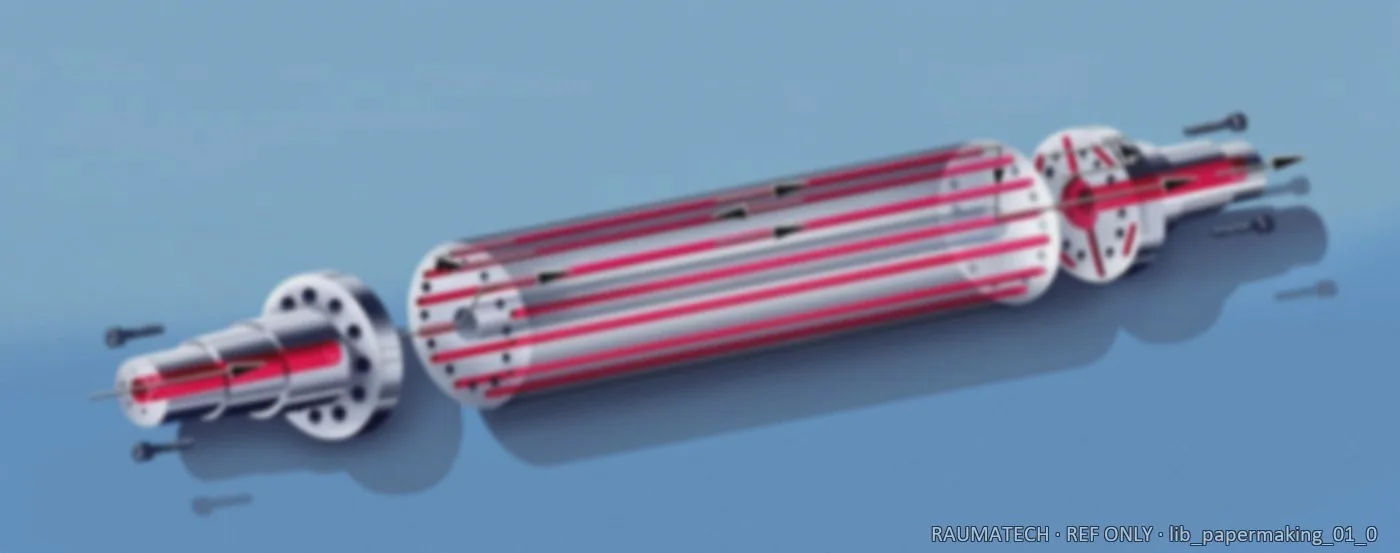
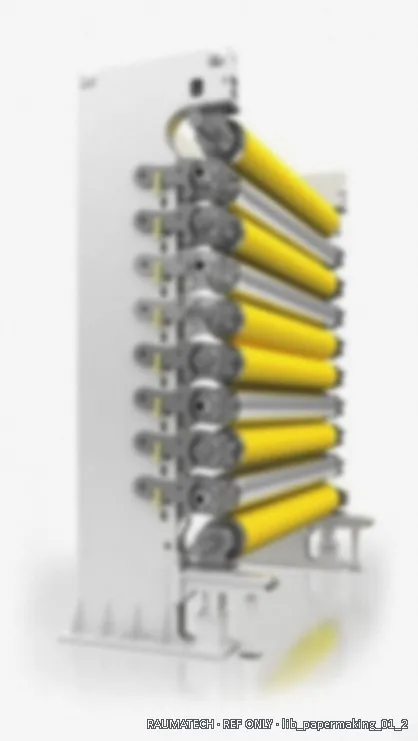
| Principle | Heated roll + controllable-crown (CC) roll form an adjustable nip. |
| Heating medium | Hot water / steam / thermal oil circulation control. |
| Load control | Hydraulic loading with linear-displacement sensor closed loop. |
| Typical problems | Roll barring, edge overload, thermal streaks. |
2 · Maintenance Process
Shutdown & handoverDrain medium, cool and depressurize; lock out; record original loading and alignment data.
DisassemblyRemove doctors, rope system and rotary joints; lift out the intermediate roll and loading-arm pins.
CleaningHigh-pressure wash and degrease; remove fibre, oil and medium scale; dismantle bearing housings.
NDTPT/MT on roll surface and journals; mark barring, cracks and nip crush damage.
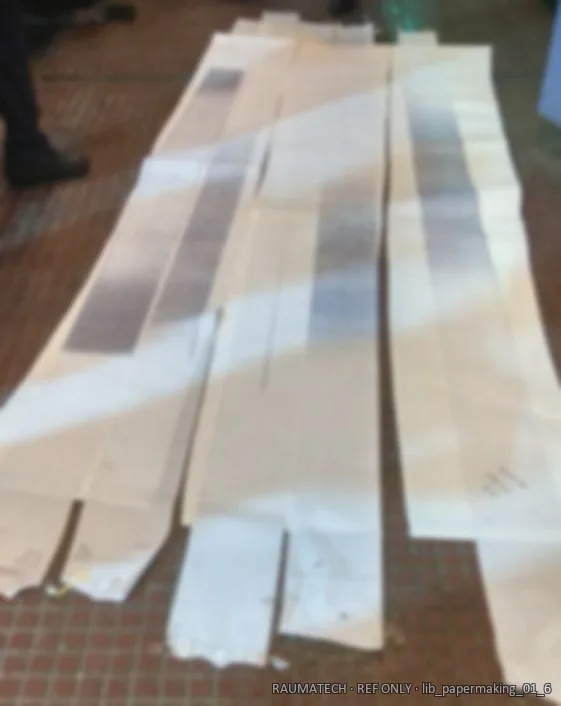
MetrologySurface roundness, crown, roll diameter, pin/bearing fits, nip footprint width on paper.
Pivot-point overhaulReplace worn pins and bearings, loading cylinders and shafts — 3-year overhaul cycle.
Roll surface repairGrind / local build-up / recover to restore crown and roughness.
Hydraulics & sensorsFlush valve blocks and renew seals; pressure-test cylinders; recalibrate linear sensors.
Assembly & alignmentRefit roll stack and arms; verify nip parallelism and pivot alignment.
Trial runCirculate medium and heat up; hydraulic loading trial — nip footprint uniform, no side bias.
3 · Key Process Photos
4 · Acceptance & Handover
Roll roundness and crown to drawing; nip footprint uniform across the width with no local hard zones; pivot pins and bearings replaced with no play under load; hydraulic pressure test leak-free, linear sensors calibrated; stable roll-temperature circulation. Delivered with metrology records, NDT report and loading calibration records. Tip: barring is often a coupling of nip vibration and surface wear — after repair, re-check roll balancing and foundation bolting.